Welcome back to the second installment of my series documenting my journey through the Tagisan ng Talino: Codefest, a mobile development hackathon hosted annually by STI College here in the Philippines.
It's now 2025, and since my last Codefest in 2024, I've had the privilege of participating in several hackathons, including AppCon Hackathon 2024, KMC Hackathon 2024, ICT Week Hackathons for both June and November, and even the NASA Space Apps Challenge 2024. More recently, I also competed in the 13th IT Skills Olympics at the University of Makati, representing STI College Ortigas-Cainta in the Python Programming category at a national level.
I'll likely share stories about those competitions in future blogs, but for now, let's focus on this year's Tagisan ng Talino: Codefest Local Level 2025.
A Change in the Lineup
As I began assembling the same team I'd competed with in last year's Codefest and throughout 2024, one of my teammates faced a tough decision: whether to join the competition or focus on his IT Capstone Project.
For context, we're currently in the second semester of our third year in college, and the capstone is a major project demanding immense time and effort. After weighing his priorities, he ultimately decided to step down from the team to dedicate himself fully to his capstone. It was a bittersweet moment, we'd gone through so many hackathons and late-night coding sessions. But I respected his decision.
Thankfully, I found a capable new member to fill the spot, and with our lineup complete, we moved forward.
Training Like It's a Game
Our training sessions were intense but fulfilling. We simulated real Codefest problem statements, the kind of challenges typically given in the competition, and practiced building Android apps in Android Studio with Java under time pressure.
The sessions varied in duration, from one to six hours, depending on our schedules. It honestly felt like hopping into a Counter-Strike or Valorant match with friends, except instead of chasing frags, we were chasing clean, functional code. It made the process enjoyable, productive, and competitive.
Sometimes, I'd find myself coding alone when others were unavailable, but most of the time, we trained as a team. Our practice apps ranged from invoice generators to business quotation apps and inventory management systems, carefully chosen to match the themes and formats typical of Codefest problems.
The Big Day Arrives
When competition day came, we walked in feeling prepared and focused. I packed my trusty keyboard, snacks, and essentials, ready to code through the six-hour sprint. I also reminded myself not to underestimate anyone in the room.
When the timer started, we received our problem statement:
Develop an offline inventory management system for a coffee shop.
Perfect. It aligned closely with the apps we'd built during our training, our preparation had paid off.
Rapid Prototyping and Focused Execution
We quickly delegated tasks, analyzed the requirements, and got to work. Within three hours, we had all the core features completed, half the allotted time. Compared to last year, where we barely finished and struggled with bugs, this was a monumental improvement.
For data persistence, I opted for Shared Preferences combined with the Repository Design Pattern and the GSON library for JSON serialization, instead of SQLite. While SQLite is typically more robust for inventory apps, I prioritized rapid development and a working prototype, which proved to be a wise call.
One sobering moment during the hackathon: I heard that someone nearby collapsed due to exhaustion and starvation, having skipped a meal before the competition. I hadn't even noticed, I was so deeply focused on the task at hand. It's a reminder of how intense these contests can be, and the importance of self-care amidst competition.
Presentation and Results
With our app polished and tested for edge cases, we wrapped up with time to spare. Unlike last year, where I felt exhausted and jittery from caffeine, I felt clear-headed and steady this time.
We were first to present to the judges, confidently showcasing our app and walking them through its features and design decisions. Then came the waiting game as other teams presented and the judges deliberated.
Oddly enough, while waiting, I wasn't fatigued. In fact, I opened my laptop and began coding a personal project on GitHub, the competition had ended, but my coding drive hadn't.
Crowned Champions
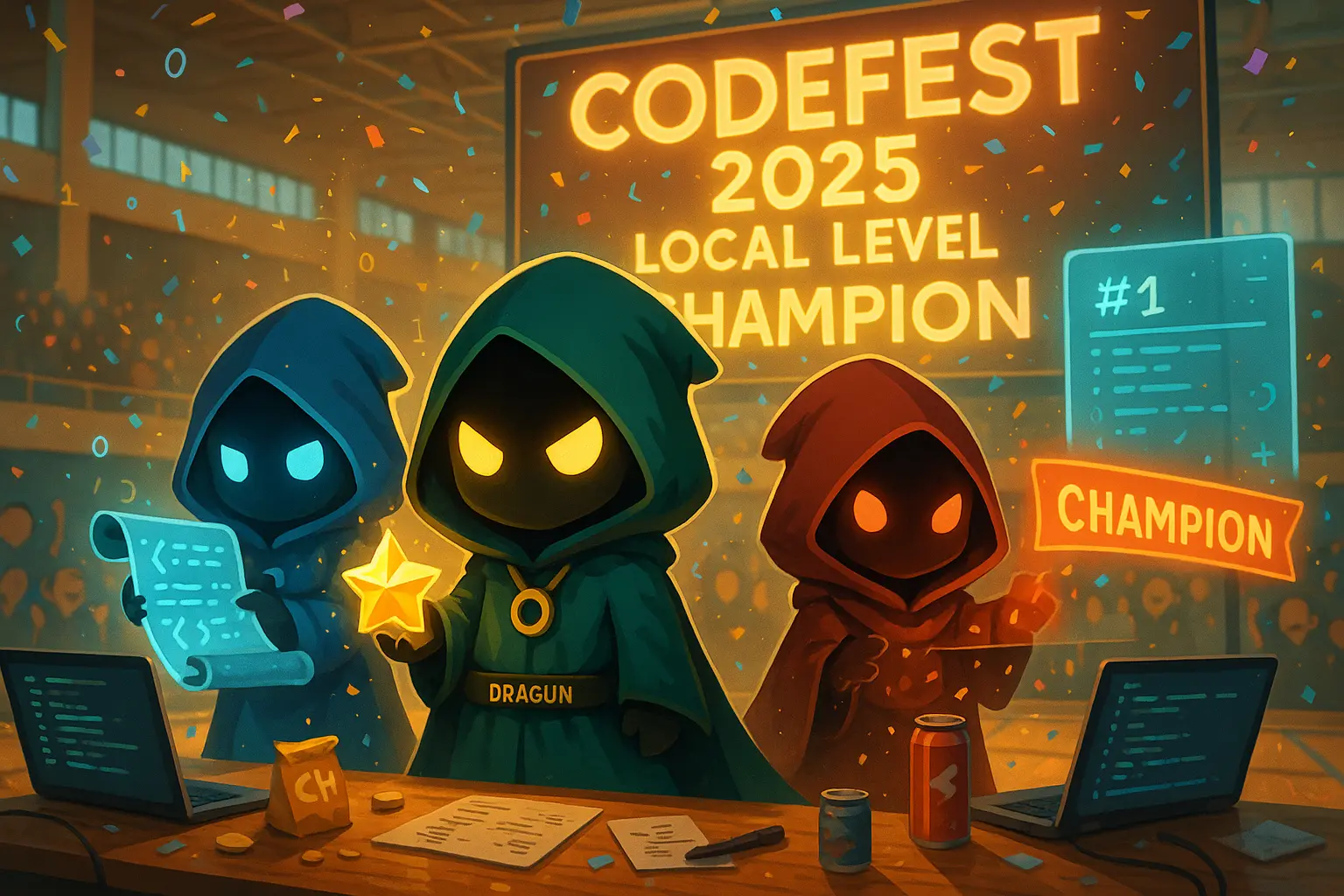
Finally, the results were announced at the gymnasium, and our team was crowned Champion of the Codefest Local Level 2025 for STI College Ortigas-Cainta. We would be representing our campus in the Cluster-Level Codefest Hackathon next month.
To be honest, I wasn't entirely surprised. The hard work, deliberate preparation, and countless training sessions had built a quiet confidence in me. Still, it was immensely rewarding to hold that certificate and wear the golden, star-shaped medal around my neck.
Looking Ahead
Afterward, we celebrated with a well-deserved meal at McDonald's before heading home. But even as I left, my mind was already racing with thoughts of the upcoming Cluster-Level round.
I wasn't going to let this victory make me complacent. I wanted more. I wanted to be better. The fire to improve, to chase the next milestone, and to push past my limits had only grown stronger.
The story of what happened at the Cluster-Level Codefest and how we became the champion of the cluster-level will be for another blog. Stay tuned.
GitHub Link to DragunCafe, the project we've developed during the Codefest Local Level of 2025.
Takeaway
Growth isn't always measured by titles or medals, it's in the quiet confidence that comes from consistent practice, the lessons in setbacks, and the friendships forged in the trenches of hard work. Hackathons are more than just coding contests; they're opportunities to discover what you're truly capable of.